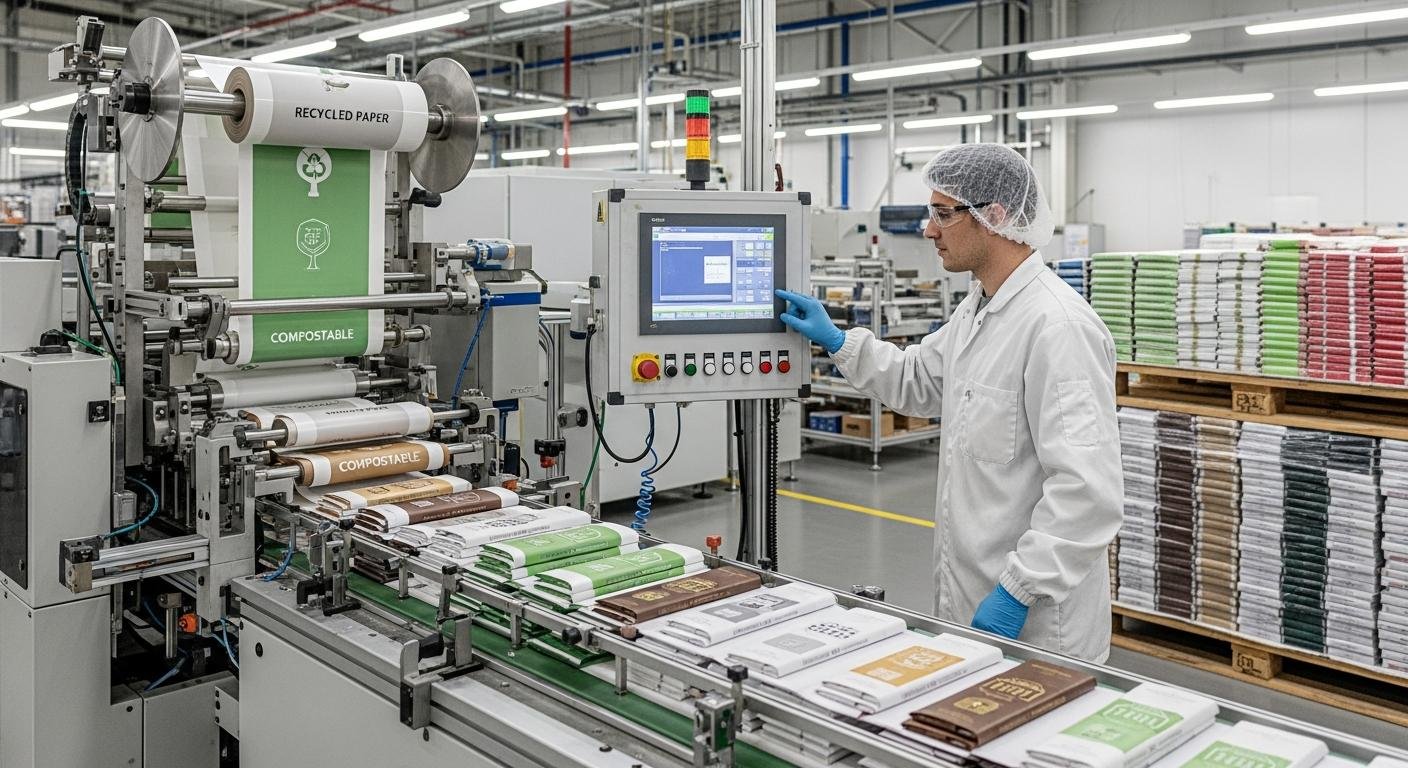
Packaging is becoming an increasingly strategic part of the food industry. Beyond containing a product, it can influence shelf life, transportation efficiency, product information, brand recognition and the customer experience.
Food manufacturers are evaluating improvements in flexible packaging, barrier materials, sealing systems, digital printing and packaging automation. The most appropriate solution depends on the product's characteristics, distribution requirements and intended shelf life.
Packaging and product protection
Moisture, oxygen, light and temperature can affect food quality. Packaging must therefore be selected according to the specific requirements of the product rather than appearance alone.
For example, snacks may require moisture protection to preserve crispness, while certain beverages and processed foods need packaging designed around their processing and storage conditions.
Efficiency matters on the production line
Automated filling, sealing, labelling and coding systems can help manufacturers improve consistency and reduce manual handling. However, the benefits depend on production volume, equipment suitability, maintenance and operator training.
Businesses are also examining packaging material efficiency and recyclability. Any environmental claims should be supported by evidence, and packaging choices must remain compatible with food safety and applicable regulations.
What manufacturers should evaluate
Before changing a packaging format, businesses should assess material performance, sealing integrity, transport durability, total cost, labelling requirements and compatibility with existing machinery.
Industry takeaway: The best packaging solution balances product protection, production efficiency, regulatory compliance, cost and market expectations.